

Neck pain is common — and often preventable.
Modern life is hard on the neck. Long hours at a computer, prolonged phone use, poor sleeping posture, and everyday stress all leave their mark on the cervical spine. The good news: most neck pain is manageable at home, and much of it is preventable if you know what to do.
How much of your day is on a screen?
Studies show that looking down at a phone at a 60° angle puts up to 27 kg (60 lbs) of load on the cervical spine — the equivalent of carrying a 7-year-old on your neck all day.
What can help when your neck is sore
Whether it’s a stiff morning neck or a slow ache that’s been building all week, these simple measures work for most people:
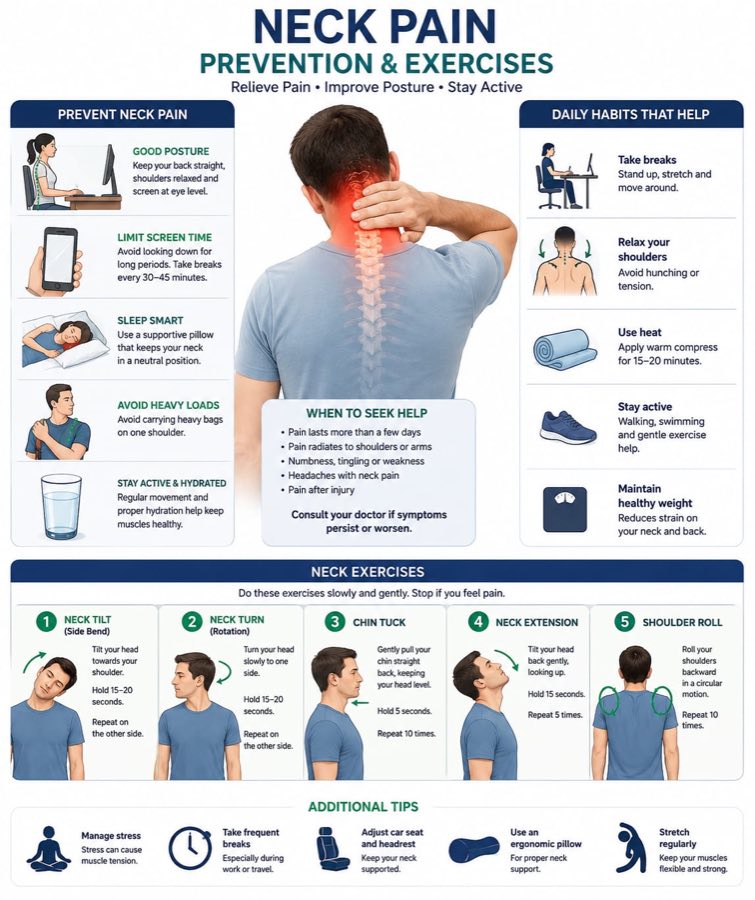
- Keep your head and neck in a neutral position when working — screen at eye level, shoulders relaxed, not hunched forward.
- Avoid “text neck.” Frequent downward looking at your phone is one of the biggest daily loads on the cervical spine.
- Take short movement breaks every 30–60 minutes. A one-minute stretch is more effective than an hour-long session at the end of the day.
- Gentle neck and shoulder stretches can help relieve stiffness. Slow, controlled range-of-motion movements — not aggressive cracks or twists.
- Maintain regular physical activity and good sleep habits. A supportive pillow that keeps your neck aligned with your spine matters more than most people realise.
- Simple pain-relieving measures — warm compresses, over-the-counter pain relief — may help when appropriate. Consult your doctor before starting anything new if you have other conditions.
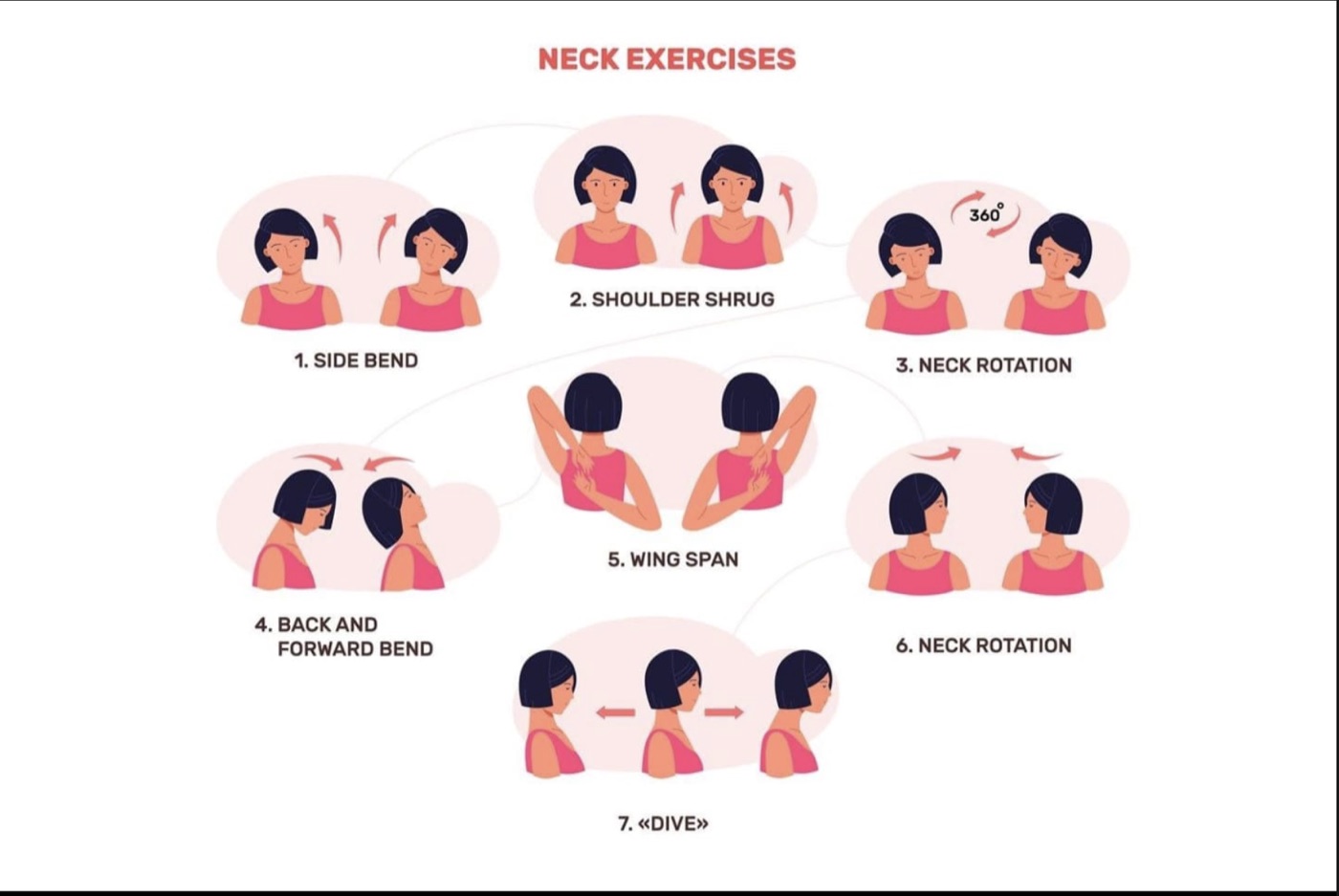
Prevention — the daily habits that matter most
The best treatment for neck pain is not needing treatment. A few daily habits make a real difference:
- Set your workspace properly. Monitor at eye level, chair supporting your lower back, feet flat on the floor.
- Change position often. Even perfect posture becomes harmful if held for hours.
- Choose the right pillow. Side sleepers need thicker support, back sleepers need thinner. Stomach sleeping is hard on the neck for everyone.
- Strengthen the neck and shoulder muscles. A stronger neck is a more forgiving neck.
- Manage stress. Tension lives in the neck and shoulders for most people — daily walks, breathing exercises, or just consistent sleep help more than you’d expect.
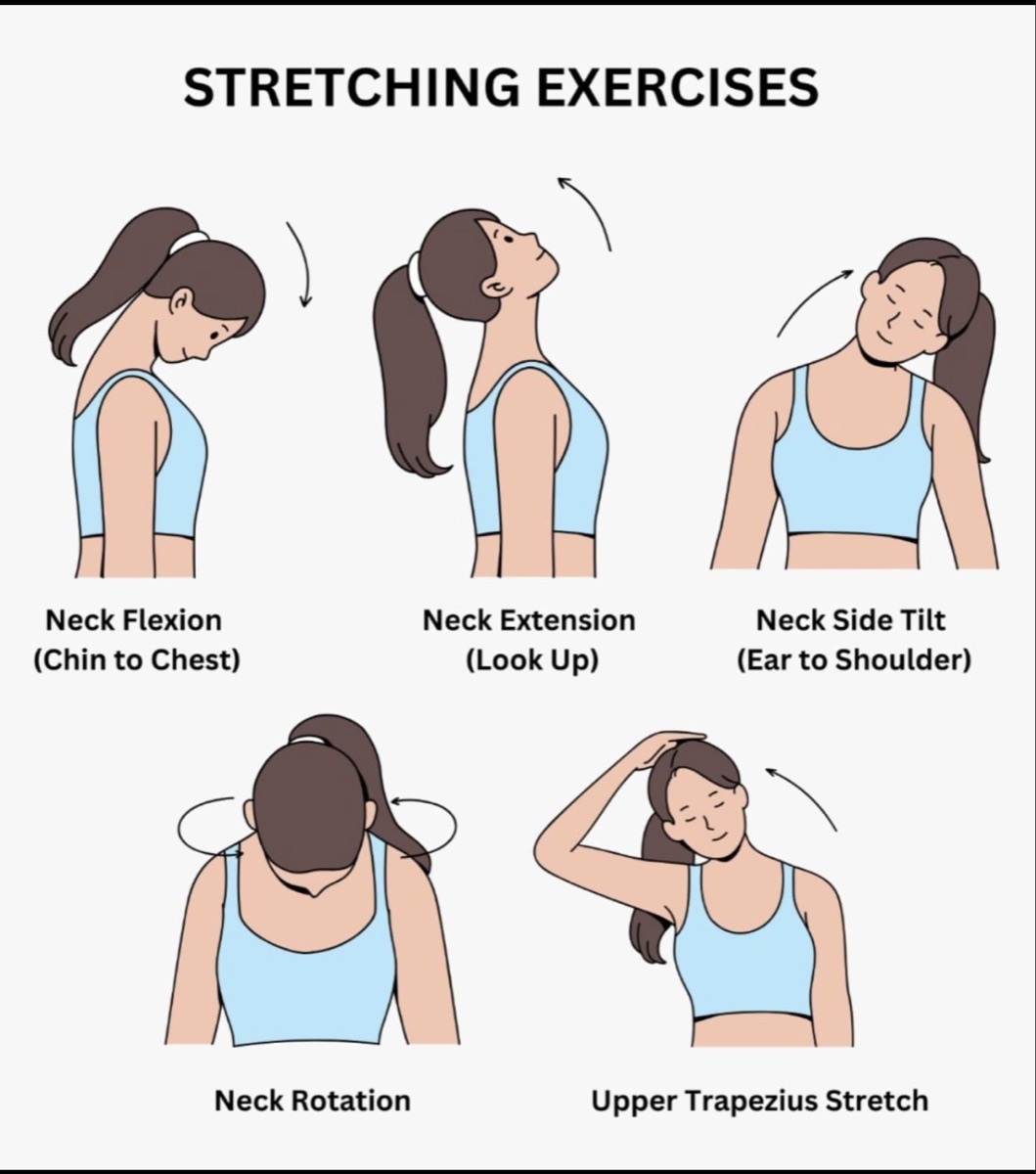
If you want a quicker daily routine to keep the neck loose between longer sessions, these five gentle stretches are especially effective — do each one for 5 to 10 seconds, twice a day.
When to see a doctor
Most neck pain resolves on its own within a few days. But some signs mean it’s time to have a doctor look at it.
See a doctor if you have any of these red flags
• Severe or persistent pain that doesn’t respond to rest and gentle stretching
• Neck pain after an injury or accident (fall, car accident, sports injury)
• Numbness, weakness, or tingling in the arms or hands
• Loss of balance or difficulty walking
• Severe headache — especially if new or different from your usual pattern
• Fever with neck stiffness
• Any neurological symptoms you can’t explain
These can indicate nerve compression, disc problems, or (rarely) something more serious that benefits from early evaluation.
The bottom line
Most neck pain is your body asking for better daily habits — not a sign of something serious. But when it doesn’t settle, or when the warning signs appear, a proper clinical assessment gives you clarity and a plan.
Listen to your neck. Move regularly. Fix your workspace. Don’t ignore persistent symptoms.
Book with Dr. Salah Fouad Hafez
If you’re dealing with persistent neck pain, book a consultation with Dr. Salah at Al Diyafa Modern Medical Centre (Jumeirah-1). Clinic hours: 2:00–6:00 PM daily except Friday and Sunday. WhatsApp us at +971 50 210 5888.
Emergency? Call 998.
If you or someone you’re with is having a medical emergency, call 998 (UAE ambulance) or go to the nearest emergency department. Don’t delay care for the sake of a clinic appointment.
Have questions about this topic?
Chat with our clinical team — usually under 10 minutes during clinic hours.
By Dr. Salah Fouad Hafez
Senior General Practitioner. Practising at Al Diyafa Medical Group, Dubai.
Medical disclaimer. This article is provided by Al Diyafa Medical Group for general health information only. It is not a substitute for professional medical advice, diagnosis, or treatment. Always seek the guidance of your physician or another qualified health provider with any questions you may have regarding a medical condition. Al Diyafa Medical Group is licensed by the Dubai Health Authority (DHA). All clinicians referenced hold active DHA licenses in their respective specialties.